CONNECTING WOOD WITH PRECISION



Steel Material Specifications & Standards for Hot Press Plates
Tailored for 1000-3000T Short Cycle Laminating Hot Presses
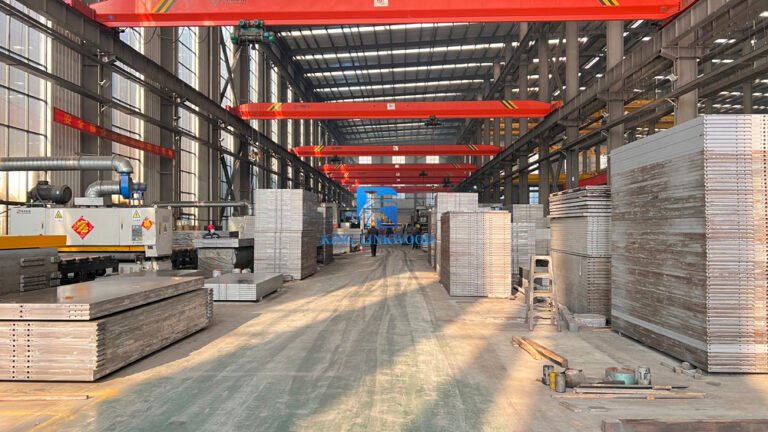
As the core component of high-pressure short cycle laminating hot presses (1000T-3000T), hot press plates rely on premium steel materials and strict manufacturing standards to withstand extreme pressure (10,000KN-30,000KN) and high temperatures (up to 180℃) during continuous operation. Below are the detailed steel material specifications, material selection, and compliance standards, designed to ensure structural stability, uniform heat conduction, and long service life.
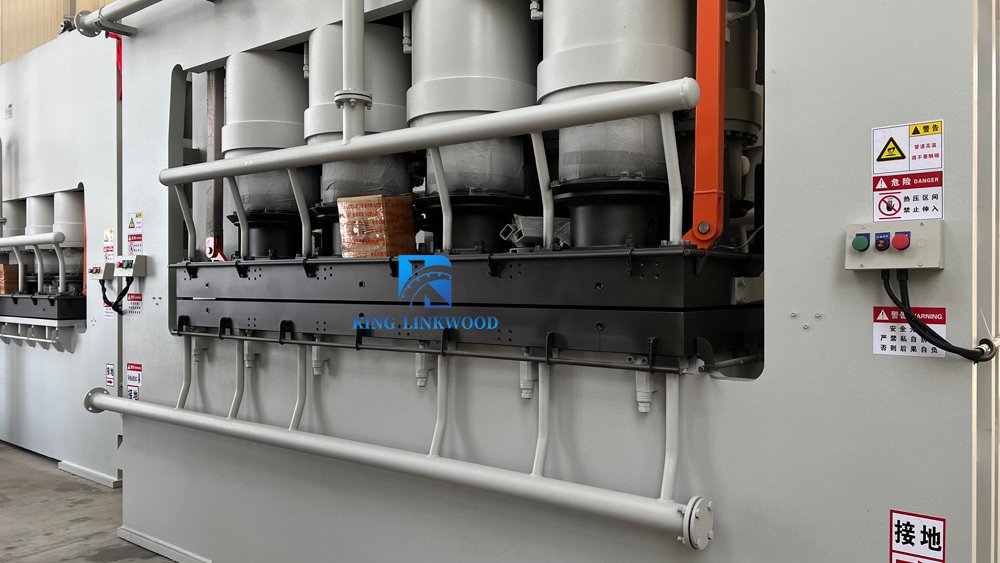
1. Core Steel Material Selection
For 1000-3000T hot presses, the steel materials of hot press plates are selected based on pressure resistance, thermal conductivity, and deformation resistance. The following materials are widely adopted in industry practice and compliant with national/international standards:
|
Material Grade |
Key Properties |
Application Scenarios |
|
Q345 (16Mn) |
High yield strength (≥345MPa), excellent toughness, good weldability, and thermal stability. Balances cost and performance. |
1000T-2000T hot presses for furniture boards, flooring, and cabinet panels. |
|
Q355 |
Enhanced strength compared to Q345, higher fatigue resistance, suitable for high-pressure long-term operation. |
2000T-2500T hot presses for large-format panels (e.g., 1830×2750mm). |
|
45 Steel (Carbon Steel) |
High hardness (HB≥197 after heat treatment) and wear resistance, ideal for precision heat conduction. |
2500T-3000T heavy-duty hot presses requiring strict surface flatness. |
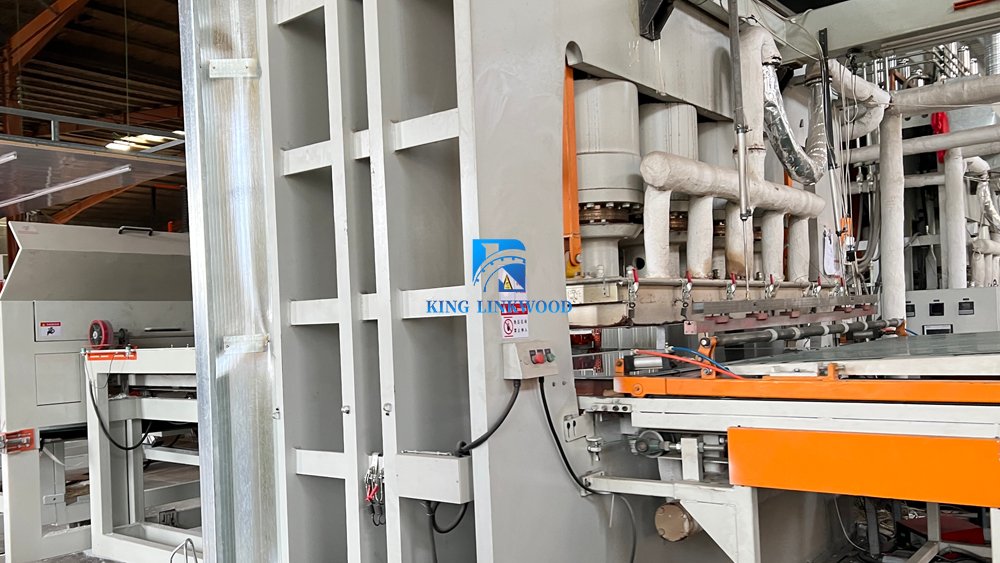
2. Steel Plate Dimensional Specifications
The thickness, length, and width of the steel plate are customized according to the hot press model (1000T-3000T) and the target board size (e.g., 1220×2440mm, 1830×2750mm, 2150×2750mm). Key specifications are as follows:
|
Hot Press Capacity |
Steel Plate Thickness (mm) |
Applicable Board Size (mm) |
Thickness Tolerance |
Length/Width Tolerance |
|
1000T-1500T |
60-80 |
1220×2440, 1220×2750 |
±0.5mm |
±1.0mm |
|
1600T-2000T |
80-100 |
1830×2440, 1830×2750 |
±0.5mm |
±1.0mm |
|
2100T-2500T |
100-120 |
2150×2440, 2150×2750 |
±0.8mm |
±1.2mm |
|
2600T-3000T |
120-140 |
Large-format panels (e.g., 2440×3050mm) |
±0.8mm |
±1.2mm |
Design Notes:
- The thickness is optimized to resist deformation under maximum pressure (e.g., 120mm thickness for 3000T presses ensures no permanent deformation during 1.2×max pressure load tests ).
- Internal flow channels (for steam/thermal oil) are CNC-machined with a diameter of 25-30mm and a spacing of 90mm, ensuring uniform heat distribution . The channel alignment accuracy is ≤0.033mm to avoid local overheating.
3. Manufacturing & Performance Standards
To meet the requirements of 1000-3000T short cycle laminating presses, the steel plates must comply with the following standards and undergo strict quality control:
3.1 Material & Welding Standards
- Chemical Composition: Must meet the requirements of GB/T 1591-2018 (for Q345/Q355) or GB/T 699-2015 (for 35/45 steel), with sulfur (S) and phosphorus (P) content ≤0.035% to prevent brittle fracture.
- Welding Quality: Welds shall be free of porosity, slag inclusion, or cracks. Spliced hot press plates require ultrasonic flaw detection (UT) in accordance with GB/T 12467.2 (Welding of steel plates for machinery) . The welding gap must withstand a hydraulic pressure of 30kg/cm² without leakage .
3.2 Heat Treatment Requirements
- Steel plates undergo vacuum temperingto eliminate internal stress, improve hardness uniformity, and reduce deformation. The surface hardness after treatment is HB180-220 .
- For 2000T-3000T presses, additional stress relief annealingis performed after CNC machining to ensure dimensional stability under long-term high-pressure operation.
3.3 Surface & Precision Standards
- Surface Finish: The working surface is precision-ground with a smoothness accuracy ≤1.8μm to ensure uniform pressure transfer and prevent board surface scratches .
- Flatness: The parallelism tolerance of the plate surface is ≤0.03mm per square meter , complying with industry standard.(General Technical Conditions for Hot Presses for Wood-based Panels) .
- Temperature Uniformity: When heated with 0.3MPa saturated steam or thermal oil, the maximum temperature difference across the plate surface is ≤5℃ , ensuring consistent laminating quality.
3.4 Load Test Standards
- New hot press plates must pass a load test of 1.2×max working pressure (e.g., 36,000KN for 3000T presses) for at least 2 cycles, with a pressure drop ≤5% during 5-minute pressure holding .
- The test shall be conducted in accordance with GB/T 18262 (Test methods for performance of hydraulic presses) .
4. Application Advantages of Compliant Steel Plates
- Pressure Resistance: Q355/45 steel plates with 100-140mm thickness can withstand 10,000-30,000KN pressure without deformation, matching the requirements of 1000-3000T hot presses.
- Longevity: Strict material selection and heat treatment extend the service life to 8-10 years (2-3 times longer than non-standard plates), reducing replacement costs.
- Energy Efficiency: High thermal conductivity of Q345/Q355 ensures rapid temperature rise and uniform heat distribution, reducing energy consumption by 15-20% compared to low-grade steel.
- Compatibility: Fully compatible with all 1000-3000T short cycle laminating hot presses (including upper-mounted cylinder type), supporting board sizes from 1220×2440mm to 2150×2750mm.